Back to Insights
Trend #taro#latam#central-america#trend#milk-tea
Why Taro Milk Tea Is Central America's Favourite Bubble Tea Flavour
November 20, 2025 · EZTasty Team
November 20, 2025 · EZTasty Team
From Costa Rica to Guatemala, taro has become the signature colour of the bubble tea boom in Central America. Here's why purple sells — and how to source it.
Walk into any bubble tea shop in San José, Guatemala City, or Panama City today and you will find one colour dominating the ordering board, the Instagram grid, and the counter display: purple.
Taro milk tea has become the defining drink of the Central American bubble tea boom — not because it is the cheapest, the easiest to make, or the most familiar flavour to local consumers. It has become a bestseller precisely because it is none of those things. Taro is the drink that makes people stop, point, take a photo, and order.
Central American food and beverage culture is rich in colour — tropical fruits, fresh juices, vibrant salsas. But nothing in the daily diet of a consumer in Tegucigalpa or San Salvador is naturally that shade of purple.
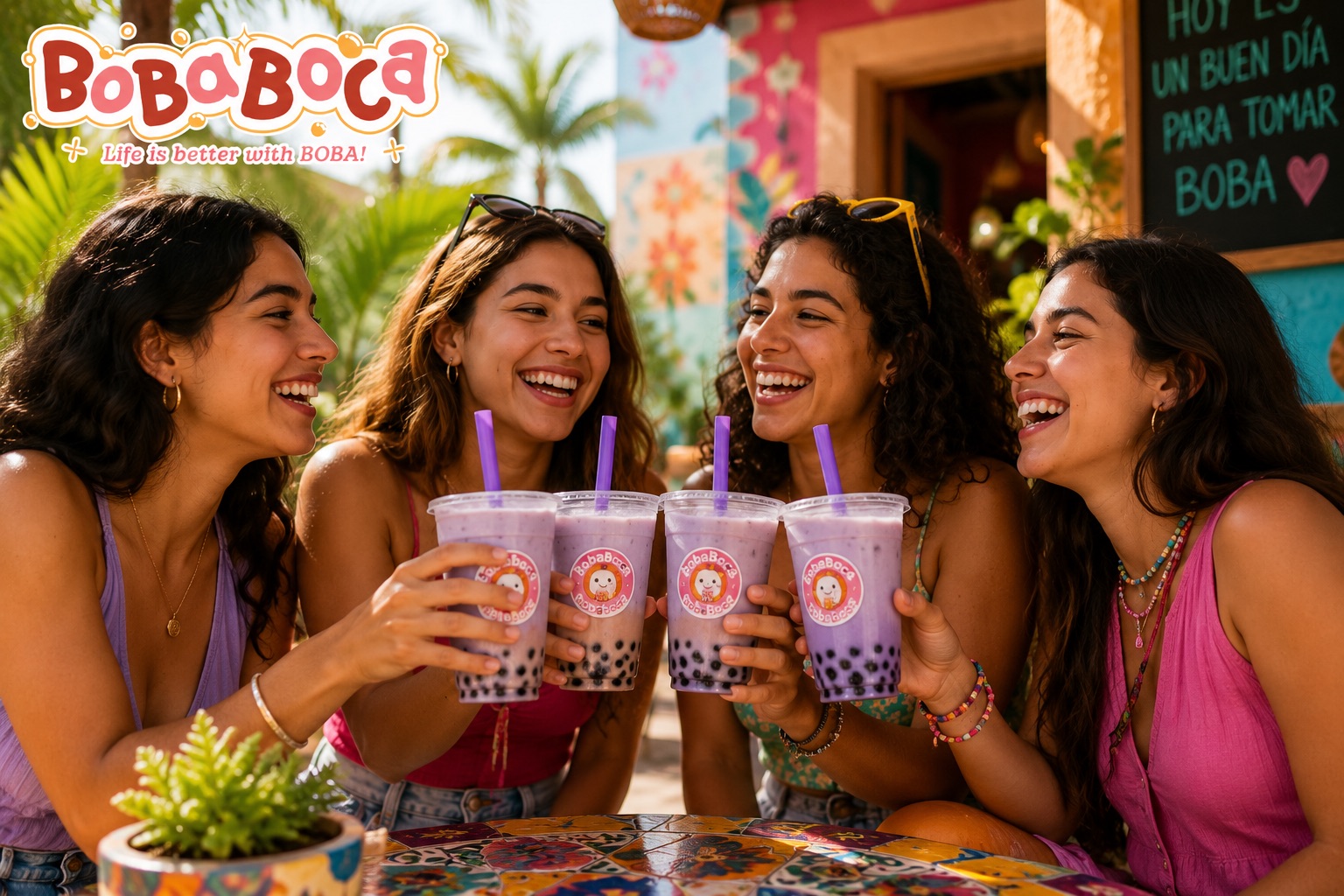
Taro milk tea occupies a unique visual space. Its lavender-to-deep-violet colour gradient is unlike any mainstream beverage in the market. In a clear cup with black tapioca pearls at the bottom, it reads instantly as something new, something worth trying, something worth photographing.
This is what operators in the region quickly discovered: taro does not need to be explained. It needs to be shown.
A clear refrigerator display or a single promotional photo on Instagram is enough. The colour is the marketing.
Most successful bubble tea markets develop along a predictable arc. Consumers start with familiar flavours — milk tea, fruit tea, coconut — and gradually become curious about less familiar ingredients. Taro sits in a unique position on this curve.
It is exotic enough to feel like a discovery, but approachable enough not to be intimidating. The creamy, mildly sweet, earthy flavour profile is not challenging. There is no sharp acidity, no unusual bitterness, no unfamiliar aroma. First-time taro drinkers almost universally describe it as “smoother than expected” and “sweeter than it looks.”
This combination — visually striking, flavour-accessible — makes taro the ideal second order for a customer who started on classic milk tea. In Central American markets where bubble tea is still relatively new, taro functions as the step that converts a curious first-timer into a regular customer.
The data on Gen Z consumer behaviour in Latin America is clear: purchase decisions in the food and beverage category are disproportionately influenced by visual social media content. TikTok and Instagram have become the primary discovery channels for new drink formats across the region.
Taro milk tea is one of the most photographed drinks in the global boba category. The reasons are structural:
In markets where bubble tea is still building consumer awareness, every photograph shared on social media is effectively free advertising for the category. Operators who lead with taro on their social channels consistently report that it is their most-shared and most-saved content.
Shop owners across Costa Rica, Guatemala, El Salvador, and Panama — markets where the bubble tea category has grown fastest in the region — consistently rank taro among their top three selling flavours, often above classics like brown sugar and matcha.
The pattern is consistent: taro attracts new customers through visual discovery, delivers on the flavour expectation, and converts them into repeat buyers. Unlike some trending flavours that spike and fall, taro has demonstrated sustained demand across multiple years of market data.
For operators entering the market, taro is not a seasonal special or a limited-edition item. It belongs on the permanent menu.
The quality of taro powder varies significantly between suppliers. The key variables are colour intensity, solubility, and flavour profile — three factors that determine whether the final drink looks and tastes like the product customers expect from their social media research.
Colour intensity is the first thing a customer notices. Low-quality taro powders produce a grey-brown result that looks nothing like the vibrant purple that drove the purchase decision. Taiwan-manufactured taro powder, produced under strict food safety standards, consistently delivers the saturated lavender-to-purple colour that photographs well and matches consumer expectations.
Solubility matters for operational consistency. A powder that clumps or requires excessive mixing slows down service and introduces quality variation between batches. High-grade Taiwan taro powder dissolves cleanly in warm water, producing a smooth, uniform base every time.
Flavour profile is where the origin difference is most apparent. Taiwan has been producing taro-based ingredients for the bubble tea industry since the category was invented in Taichung in the 1980s. The flavour profile developed by Taiwan manufacturers — mild, creamy, with a clean earthy finish — has become the global standard that consumers recognise and expect.
For Central American operators, taro is versatile enough to anchor multiple menu items. The same base powder can be used across different drink formats:
| Drink | Format | Notes |
|---|---|---|
| Taro Milk Tea | Hot or iced | Core menu item. Black tapioca pearls. |
| Taro Slush | Blended | Best-seller in hot months. |
| Taro Latte | Hot, steamed milk | Premium positioning, higher margin. |
| Taro Popping Boba Tea | Iced fruit tea | Lighter, no-milk version. |
| Taro Cheesecake Tea | Iced, with cheese foam | Premium tier, social media driver. |
A shop that commits to taro as a hero flavour can build multiple SKUs around a single ingredient, reducing supplier complexity while offering meaningful menu variety.
The practical question for importers and distributors entering the Central American bubble tea supply chain is not whether to carry taro — it is which taro powder to source and in what format.
Taiwan manufacturers offer taro powder in retail packaging (500g–1kg) for direct shop use and in bulk commercial packaging (10kg–25kg) for distributors supplying multiple accounts. OEM private-label production — taro powder in your own brand packaging — is available from a minimum order quantity that makes economic sense for regional distributors.
For operators in Costa Rica, Guatemala, El Salvador, Panama, and Honduras, the logistics case for Taiwan-sourced taro powder is well established. Taiwan exporters have decades of experience with food export documentation, cold-chain management, and customs compliance for Central American markets.
Taro milk tea has earned its place as Central America’s favourite bubble tea flavour not through marketing budgets or trend forecasting, but through the most reliable mechanism in the food business: it looks extraordinary, it tastes better than expected, and every customer who orders it tells someone about it.
For importers, distributors, and shop operators building their bubble tea business in Central America, the question is not whether to stock taro. The question is how much.
EZTasty (Yoshiei Co., Ltd.) manufactures and exports taro powder and bubble tea ingredients from Taichung, Taiwan. Request a sample or wholesale pricing →
Get samples, pricing, and export documentation from Taichung.
Request a Quote